
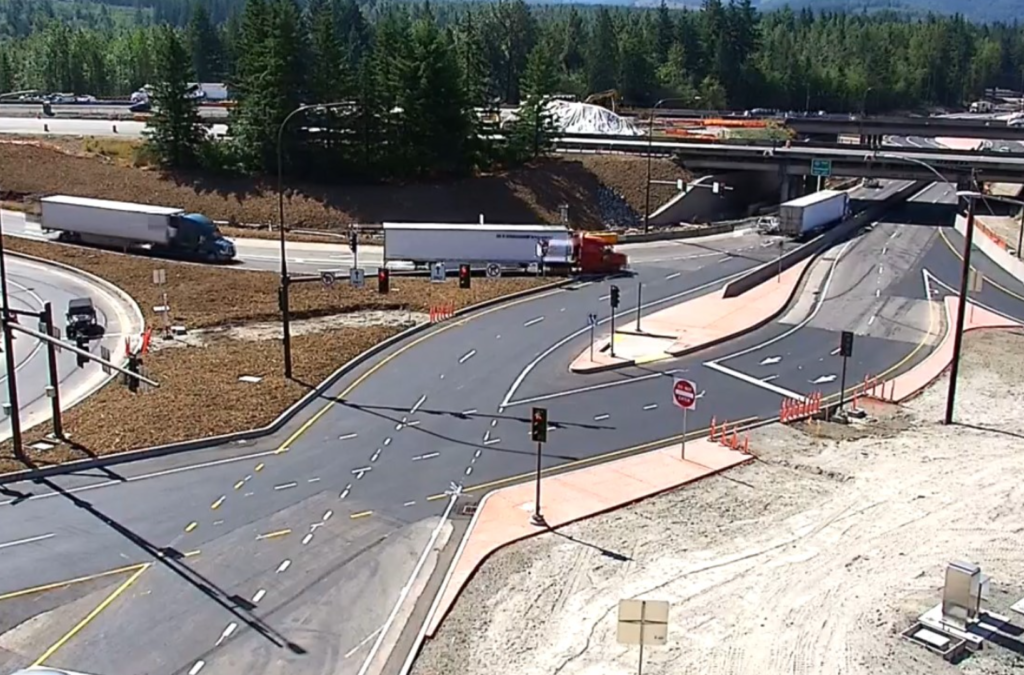
The completion of the new interchange at Interstate 90, Highway 18, and Snoqualmie Parkway marks one of the most significant infrastructure upgrades the City of Snoqualmie has seen in years. This new road structure is known as a diverging diamond interchange, or a double crossover diamond, and anyone who has driven through it can quickly understand why it feels different.
This $192 million transportation project, led by the Washington State Department of Transportation, widened Highway 18 from one lane to two lanes in each direction and introduced the modern interchange design to reduce congestion and improve long-term traffic flow.
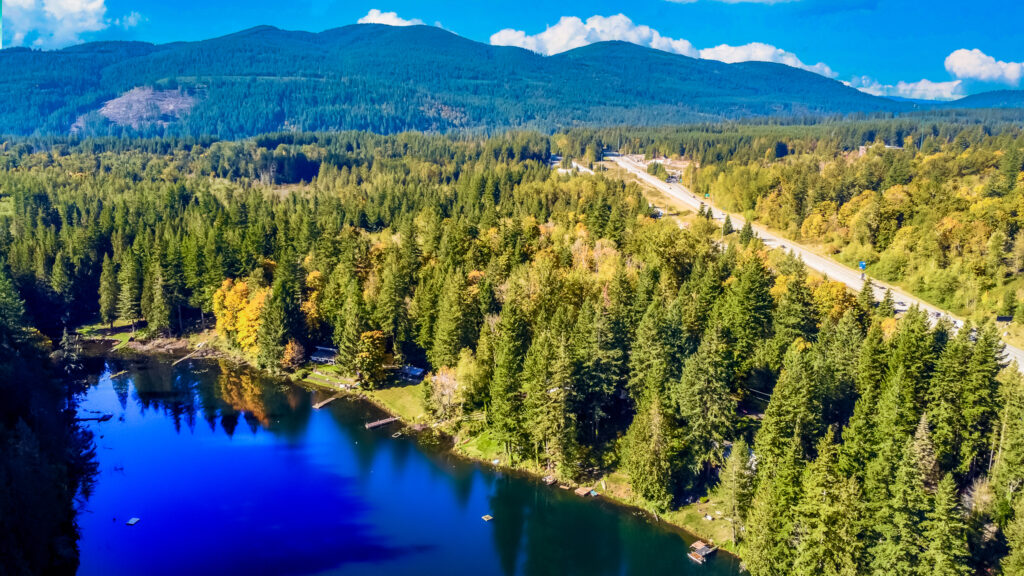
For Snoqualmie residents, especially those living on Snoqualmie Ridge and near Echo Lake, the impact has been immediate and noticeable. Even those who just live on the south end have seen a significant improvement in traffic conditions.
What Traffic Was Like Before the Interchange
Before the interchange opened, this intersection was one of the worst congestion points in the Snoqualmie area.
Between 3:00 PM and 6:00 PM, traffic backups were routine. The right lane of eastbound I-90 often stretched close to a mile. Westbound I-90 experienced similar delays, and Snoqualmie Parkway frequently became gridlocked as traffic spilled into nearby neighborhoods.
Daily life revolved around avoiding peak traffic. Many residents planned errands carefully or avoided leaving home altogether in the late afternoon. A five-minute trip could easily turn into an hour-long return home.
That kind of congestion affects quality of life and ultimately real estate demand.
Life After the New Interchange
Since the opening of the new interchange, those traffic issues have largely disappeared.
Backups at the intersection are now minimal. Traffic moves smoothly in all directions, even during peak commute hours. The new design is functioning as intended, creating more predictable and reliable travel times.
In a region consistently ranked among the most traffic-congested areas in the country, having dependable access to I-90 at full speed is a meaningful advantage.
Commute reliability matters. Buyers look beyond distance and consider how predictable, stressful, and manageable the daily commute actually feels.
How Traffic Improvements Impact Snoqualmie Home Values
Infrastructure improvements don’t create value out of thin air, but they absolutely support and protect it.
When a well-known traffic pain point is removed, overall desirability in nearby homes increases. Increased desirability strengthens demand, and stronger demand helps support home values over time.
While it’s impossible to isolate exactly how much appreciation can be attributed to traffic improvements alone, removing one of the biggest objections buyers had to a neighborhood often leads to greater confidence in the market.
The neighborhood that benefited most from this project is the Echo Lake Estates area near 104th Street, just south of I-90. Before construction, this area experienced some of the worst congestion in Snoqualmie. Today, the transformation is striking. Traffic is essentially nonexistent. The new interchange design includes a dedicated turn lane onto 104th Street from Highway 18, along with a dedicated U-turn lane that allows residents to easily head westbound on Highway 18 without fighting traffic.
It’s also important to note that Echo Lake Estates was already established as a $2M+ neighborhood well before the road improvements were completed. Buyers were willing to pay premium prices for larger lots, newer homes, and proximity to Snoqualmie Ridge, even with the previous traffic challenges.
With the completion of the interchange, one of the biggest objections buyers had to the area has effectively been removed. When a high price point is already established and a pain point disappears, that supports stronger long-term real estate demand.
Walkability and Added Lifestyle Benefits
An often-overlooked benefit of the new interchange is improved pedestrian connectivity.
New crosswalks now allow residents to safely walk under I-90 from one side to the other. For Echo Lake homeowners, this means easier access to nearby amenities, including medical offices and future retail development near the hospital north of I-90.
Walkability combined with minimal traffic congestion is rare in the greater Seattle area. That combination significantly increases appeal for that area which also increases long-term buyer interest.
Why This Matters for the Snoqualmie Real Estate Market
The greater Seattle real estate market continues to be shaped by interest rates, inventory levels, and buyer confidence. However, local improvements like this one meaningfully shift perception.
When traffic friction disappears, daily stress decreases.
When daily stress decreases, an area becomes more attractive.
When an area becomes more attractive, demand strengthens.
Snoqualmie was already a desirable place to live. This infrastructure improvement removed the drawback.
Over time, that supports both market stability and long-term value growth.
About the Author
I’m Aaron Morrow, a licensed Washington State real estate broker and Realtor with over 12 years of experience helping people buy, sell, and invest in homes across King, Pierce, and Snohomish counties. I work throughout the greater Seattle area, with a strong focus on the Eastside, including Snoqualmie and Snoqualmie Ridge.
In addition to working directly with clients, I run multiple YouTube channels focused on real estate education, reaching over 6,000 subscribers. My main channel features in-depth luxury home tours, often highlighting high-end and new construction homes across the greater Seattle area. I publish detailed walkthroughs nearly every week, giving buyers an honest look at properties, neighborhoods, and design trends.
Through both video and written content, my goal is to help buyers and sellers understand the market, evaluate lifestyle tradeoffs, and make confident real estate decisions based on real-world experience.
Interested in buying or building in Snoqualmie? Check out our listings or contact me!

This content reflects local market observations and professional experience and is not a guarantee of future market performance or property value.